Showing posts with label Avant-Garde. Show all posts

Thursday, November 3, 2011


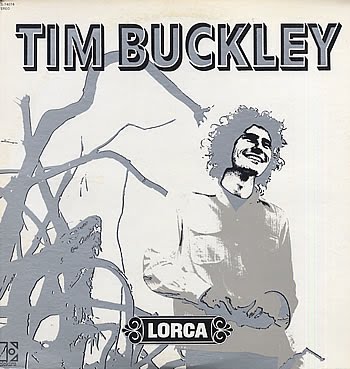
Tim Buckley Series, #11: Tim Buckley- Live at The Troubadour 1969 (1994) MP3 & FLAC


"I've been driftin' like a dream out on the sea; I've been driftin' in between what used to be."

1969 was a pivotal year for Tim Buckley. While up to this point his studio albums had, for the most part, stayed within the Folk genre (although Happy Sad  had incorporated a much more Jazz-informed approach), nothing could have prepared his listeners for the radical transformation that was to unfold on Lorca  and Starsailor, recorded within a few weeks of each other, along with the more recognizable Blue Afternoon, in mid-1969. Nevertheless, Buckley had been exploring a more improvisational live approach since the previous year, as he desired to transcend the limited musical possibilities associated with the Folk and Folk-Rock genres, as well as to escape the label of "folksinger" he had been pigeon-holed with by both his record company and the fans of his recordings. Doing so would lead him out on a creative limb that, while almost completely alienating his fan-base and destroying his commercial viability as a recording artist, would produce some of the most innovative music of the late sixties, some of which belongs in the select company of improvisational albums such as Van Morrison's Astral Weeks.

Tim Buckley
Lee Underwood: "Although Tim was not well educated (a high school graduate), he was a very bright guy. He had a marvelous feel for language, for words and ways to use them, not as an acrobatic academician might, but as extensions of intimate, heartfelt emotion. The more he moved in the direction of free-form instrumental improvisation, the more he explored vocal and verbal improvisations too, spontaneously creating verses and sometimes whole songs on the spot, especially during the Lorca  and Starsailor  period." Live at the Troubadour 1969 catches Buckley at the height of this improvisational period, and with the exception of Dream Letter: Live in London 1968, stands as the best live Buckley recording sonically as well as musically. An obvious highlight is "I Had a Talk with My Woman," which manages to trump the beautiful studio version on Lorca, again proving that Buckley was at his best in a live setting. Wringing emotion out of every note while gliding along to Lee Underwood's jazzy guitar ruminations, Buckley pushes his multi-octave voice to its limits throughout the set, particularly on the epic "Nobody Walkin'," which is extended to sixteen minutes of improvisatory brilliance. Live at the Troubadour 1969 is essential because it captures Buckley in fine form during his most fertile and innovative period, favoring languidly impressionistic explorations over pop-song predictability.

Saturday, September 17, 2011


Suicide- from the documentary "Punk Attitude"

Here's a taster for an upcoming post: Alan Vega & Martin Rev's legendary proto-post/punk duo Suicide, whose collected works are the only music I keep on my iPod (for long train trips and family gatherings)

Thursday, September 1, 2011


Velvet Underground Series, #3: The Velvet Underground & Nico- Psychedelic Sounds from the Gymnasium (2008) / All Tomorrow's Parties: Remembering The Velvet Underground (1996) MP3 & FLAC


"I'm searching for my mainline. I couldn't hit it sideways. I couldn't hit it sideways,
just like Sister Ray says."

Andy Warhol's "Exploding Plastic Inevitable" (originally called the "Irrupting Plastic Inevitable") debuted in early April 1966 at the Open Stage, a ballroom located above the Dom Bar & Restaurant in New York City's East Village, which Warhol had rented and turned into a makeshift nightclub. Early the following year, the son of the Polish owner of the restaurant approached Warhol about opening a new club on East 71st Street called The Gymnasium in a space that had originally housed a Czechoslovakian fitness & social club and that was still filled with old gym equipment. Not unpredictably, Warhol, whose plan was to create "New York's most happening discotheque," decided to leave the equipment in the club for his patrons to use if they felt so inclined. As can be imagined, the cavernous Gymnasium was not an ideal place to play a gig; however, during the club's tenuous existence (it was in a poor location and Warhol did not have an exclusive lease), Warhol was able to attract a number of bands/musicians to play there in addition to his "proteges," The Velvet Underground, who held residency at The Gymnasium during the club's first month, more or less using the gigs to fine tune their live act for the "Exploding Plastic Inevitable" (which they would play for the final time the following month). On April 30th, which was the last night of The Velvets' residency, the opening band included future Blondie guitarist Chris Stein (then a teenager): "We hung around for a little while and they played records, then we headed up for the stage. It was a big echoey place; we had absolutely no conception of playing a place like this whatsoever, but Maureen Tucker said we could use their equipment. So we plugged into their amps and the amps were all cranked up superloud [....] We must have played five or six songs and then we just gave up. By that time, the rest of The Velvets had arrived. After a while they started to play and they were like awesomely powerful [....] I was really disappointed that they didn't have Nico, because we thought she was the lead singer, but I distinctly remember the violin and their doing "Venus in Furs" because a couple of people in dark outfits got up and started doing a slow dance with a chain in between them. There were maybe thirty people there. It was very late, but it was a memorable experience."


The final night of The Velvets' residency at The Gymnasium was billed as "National Swingers Night," and at some point the fateful decision was made to capture the band's performance on reel-to-reel tape, which was a very uncommon occurrence during The Velvets' association with Warhol; what's even more surprising is that the parties concerned decided to do so in the absence of the band's "chanteuse," Nico, who had not returned from a trip to Ibiza. Psychedelic Sounds from The Gymnasium features this reel-to-reel recording (though there is some disagreement over whether it is the complete performance), and it is, quite possibly, the most important "unofficial" Velvet Underground recording in existence. This is due not only to the historic value of the recording and its surprising sonic clarity, but also to the performances, including a song that appears nowhere else in The Velvet's official and unofficial discographies: "I'm Not a Young Man Anymore." Listening to Reed's spidery guitar figure and his dark, mantra-like vocals, it's hard not to wonder how the song was never recorded in the studio, as it is easily the equal of a number of songs from both The Velvet Underground & Nico  and White Light / White Heat. Another gem is the first public performance of the epic "Sister Ray," whose crunchy guitar groove likely inspired Stein's description of the band that night as "awesomely powerful." Psychedelic Sounds from the Gymnasium captures The Velvet Underground at their grimy, arty best and makes pointedly clear what set this band apart both musically and lyrically. John Cale: "There was commitment there. That was the powerful advantage that all of Lou's lyrics had. All Bob Dylan was singing was questions- How many miles? and all that. I didn't want anymore questions. Give me some tough social situations and show that answers are possible."

Friday, August 19, 2011


Velvet Underground Series, #2: The Velvet Underground & Nico- S/T (1967) / The Velvet Underground & Nico Unripened: The Norman Dolph Acetate (1966) / Yesterday's Parties: Exploding Plastic Inevitable (2005) MP3 & FLAC


"I'll be your mirror, reflect what you are in case you don't know."

Simply put, The Velvet Underground & Nico was a game-changer that, over the course of four+ decades, has served as a guidebook for everything from Glam-Rock to Punk to Industrial and beyond, a deceptively unassuming album whose particular effect was best summed up in Brian Eno's famous pronouncement: "The first Velvet Underground album only sold 10,000 copies, but everyone who bought it formed a band." As the album cover suggests, the back-story of The Velvets' debut is very much about their brief stint as members of Andy Warhol's Factory, for it was through Warhol's mentoring and patronage that they were able to record (a now legendary) album that they themselves never thought would happen. However, from the beginning of their association with Warhol, there was conflict. Paul Morrissey, an avant-garde filmmaker and factory regular, convinced Warhol that The Velvets needed a more appealing lead singer, as Lou Reed was prone to appearing withdrawn and abrasive on stage. German fashion model and fledgling singer Nico, whom Warhol had used in a few of his films, most notably, Chelsea Girls, was Morrissey's recommendation to Warhol, who in turn set about convincing Reed and John Cale to accept Nico as the band's "chanteuse." Despite their hatred for the idea, Reed and Cale were eventually persuaded to not only accept Nico into the band, but to write a few songs specifically for her; being the intelligent opportunists that they were, they likely realized that being given new instruments, free rehearsal space, food, drugs, sex (of all kinds), and Warhol's pop-art cache were perks that few, if any, bands could ever dream of enjoying. Despite all this, at their first rehearsal with Nico present, the band reportedly drowned her voice in guitar noise every time she tried to sing. As Sterling Morrison once revealed, Nico was often a detrimental force within the band: "There were problems from the very beginning because there were only so many songs that were appropriate for Nico, and she wanted to sing them all [....] And she would try and do little sexual politics things in the band. Whoever seemed to be having undue influence on the course of events, you'd find Nico close by. So she went from Lou to Cale, but neither of those affairs lasted very long." Warhol's first major project involving The Velvets was a multimedia exhibition called the Exploding Plastic Inevitable, which involved the band playing in front of a silent 70 minute black & white film entitled The Velvet Underground & Nico: A Symphony of Sound.


Performing in the EPI allowed The Velvet Underground to regularly explore and indulge their interest in musical improvisation, a trait that would be put to use soon thereafter while recording their debut album. In 1966, the first step a band would typically take before recording an album was securing a recording contract. In the case of The Velvets, Warhol decided instead to finance the album himself with the help of Norman Dolph, a Columbia Records Sales Executive who hoped Columbia would ultimately agree to sign the band and distribute the record. In mid-April 1966, after much rehearsing and endlessly working on new arrangements intended to accurately reflect the innovative approach they had honed earlier that spring playing in the EPI, The Velvets entered an old, decrepit recording studio in New York City with Warhol as ostensible producer to record an acetate that would be peddled to various record companies. Lou Reed has clarified Warhol's role during the recording sessions: "Andy was the producer and Andy was in fact sitting behind the board gazing with rapt fascination at all the blinking lights. He just made it possible for us to be ourselves and go right ahead with it because he was Andy Warhol. In a sense he really produced it because he was this umbrella that absorbed all the attacks when we weren't large enough to be attacked. As a consequence of him being the producer, we'd just walk in and set up and did what we always did [....] Of course, he didn't know anything about record production, he just sat there and said, 'Oooh that's fantastic,' and the engineer would say, 'Oh yeah! Right! It is fantastic isn't it?'" Despite the austere recording conditions, The Velvets made the most of the opportunity. The result, known as the Norman Dolph Acetate, ended up being roundly rejected by Columbia who didn't feel the band had any talent (ditto Atlantic and Elektra); however Morrissey managed to sell it to Verve/MGM, who promptly decided to sit on it until the following year because they had just released another "weird" album, Freak Out  by The Mothers of Invention and weren't quite sure how to market The Velvets. The delay gave the band a chance to rerecord a few songs under better conditions in Los Angeles while on tour as part of the EPI and to record some new material (including "Sunday Morning") with Verve staff producer Tom Wilson in New York.


An often overlooked characteristic of The Velvet Underground & Nico is the album's sonic diversity. At the time, The Velvets were derogatorily referred to as an "amphetamine band"; they were especially reviled by the so-called "flower children" of the San Francisco music scene who saw the band as excessively dark and out to destroy the last shreds of rock music's innocence. For the 10,000 or so who actually bought the debut album when it was released, they were treated to a varied and uncompromising journey into the nether regions of the growing counter-cultural phenomenon. Not surprisingly, drug-culture steps forth front and center in the form of the album's then-scandalous centerpiece, "Heroin," which features some of Reed's most brilliant lyrics, equally evocative of a love-letter and a suicide note to the song's namesake. In addition, the song's slowly building dynamic mimics the effect of heroin as it hits the bloodstream, thus lending even more emotive power to the lyrics. On "I'm Waiting for the Man," Reed's lyrics treat the listener to the other, even darker side of heroin addiction: the perpetual need to score more skag: "I'm feeling good feeling so fine, until tomorrow but that's just some more time." The song's grimy, staccato feel provides a powerful counterpoint to the dreamy insularity of "Heroin." Much to her chagrin to be sure, Nico ended up with only three songs on the album, all of which are gorgeously off-center due to her singular vocal style. The album is at its most innovative and confrontational on the more avant-garde songs such as "Venus in Furs" and "The Black Angel's Death Song," both of which make heavy use of Cale's haunting electric viola. Not long after the release of the album, the relationship between Warhol and The Velvets began to badly deteriorate due to contractual issues relating to the distribution of album royalties as well as Warhol's decision to focus (again, at the urging of Morrissey) on Nico's solo career. In hindsight, The Velvet Underground & Nico can be viewed as an early death-knell of the hippie movement; as such, it is an abrasively avant-garde, unprecedentedly literate, unflinching existential journey into the dark soul of the sixties, while simultaneously functioning as a harbinger of nearly every underground music scene that has followed in its wake.


Monday, July 4, 2011


Lou Reed & John Cale- "Berlin" (1972) Live at Bataclan

Amazing footage of Lou doing "Berlin" during a Velvets re-union of sorts. And in case you're curious, yes, that's Nico in the background.

Wednesday, June 1, 2011


Bark Psychosis- ///Codename: Dustsucker (2004) / Game Over (1997) MP3 & FLAC -For Carlos-


"Blood disappears where deeds begin."

Saddled with one of the oddest album titles in recent memory, Bark Psychosis' ///Codename: Dustsucker, Graham Sutton's first non-comp release under the Bark Psychosis moniker in ten years, stands as a sometimes-worthy successor to the band's groundbreaking debut Hex, an album credited with creating the Post-Rock genre in name if not in style. Sutton began working on this follow-up after spending most of the post-Hex nineties focused on his Drum 'n' Bass project, Boymerang, and truth be told, //Codename: Dustsucker is a Bark Psychosis album in name only, as Sutton is the only connection to the band's earlier work, save for some "found drumming" contributed by the band's original drummer Mark Simnett. Despite the decade of silence, Sutton offers no radical deviations from the beautifully sculpted, dynamic sound of the earlier album, although it could be argued that ///Codename Dustsucker is slightly more conventional in approach, as it tends to rely far more on vocals and percussion than is generally the case within the Post-Rock genre.  On "The Black Meat," one of the more Hex-like tracks, Sutton offers layer upon layer of sonic detail, creating a lovely sense of aural space while using trumpet and harmonica to undermine its own Ambient undertow. Perhaps the best track, and one that seems to effectively build on Bark Psychosis' past, is lead track "From What Is Said to When It's Read"; with its hypnotic groove, whispered vocals, and strange electronic effects, it rides in on a wave of calm before descending into a well of eerie guitar hum. While the album is by no means as groundbreaking as the band's peerless early nineties work, Sutton is by no means simply paraphrasing his past, as he manages to explore some new and intriguing vistas within the genre he helped give birth to.

Friday, May 27, 2011

Sunday, May 22, 2011


Kate Bush- "Breathing" Video (1980)

The genius that is Kate Bush. This is one of her strangest and one of my favorites.


Talk Talk Series, #8: Bark Psychosis- Hex (1994) / Independency (1994) MP3 & FLAC


 "Incision carved out, no traces of doubt, I can't extract the truth."

While Talk Talk drummer Lee Harris worked with Bark Psychosis on both their 2004 comeback LP, Codename: Dustsucker and their brilliant and innovative debut, Hex, the true nature of the connection between Talk Talk and Bark Psychosis was one of influence, namely the influence of Talk Talk's masterpiece and swan-song Laughing Stock on the conception of and approach to recording Hex. As such, Bark Psychosis was one of the first bands (and perhaps the best) to integrate Talk Talk's later experimental work into their own aesthetic. However, Hex manages to incorporate this influence (among others) by pushing it into new contexts, and in doing so, accomplishes a rare feat among albums: it gives birth to its own genre, what critic Simon Reynolds dubbed "Post-Rock." Perhaps the defining elements of this approach are a move away from traditional pop song structure and an emphasis on texture and space over repetition and resolution. Genres and catch phrases aside, Hex is simply a singular and timeless album that is ultimately indefinable because it never coalesces into something solid or stable. A highlight among highlights is "A Street Scene"; with its seemingly looped bass part, moody guitar, horns and hushed vocals, the song, at first glance, seems to progress according to some kind of recognizable structure, but the melody is always slightly out of focus and the song ultimately refuses the confines of pop song convention. Moving even further outside the pretense of song structure is "Fingerspit," which simultaneously manages to touch on experimental Jazz and Noise-Rock. While it is a difficult track, it is also beautifully lush and intricate. Hex is something of an enigma: too experimental to be considered a pop album, but too melodic and song-oriented to be considered Ambient. Whatever it is, Bark Psychosis' debut is truly one of the essential albums of the nineties.

Thursday, March 24, 2011


Scott Walker Series, #15: Scott Walker- The Drift (2006) MP3 & FLAC


"Has absence ever sounded so eloquent, so sad?"

In the years preceding the release of Tilt  in 1995, the prospect of a new album of original material from Scott Walker seemed remote at best; however, the possibility that he would not only release such an album but that it would also turnout to be an avant-garde masterpiece was unthinkable. He did just this. Eleven years later, Scott Walker somehow managed to top this by releasing a darker, more dissonant, more harrowing, and less structured album equally deserving of being labeled a "masterpiece." Yet, like its predecessor, The Drift is anything but a user-friendly masterpiece, a shiny jewel to gaze upon over and over again; rather, it functions more like a bitter glass of absinthe, tearing down your assumptions and skewing your perceptions as it seduces you into its terrifying arms. As on Tilt, Walker's lyrics are cryptic to say the least, but they always provide a revealing counterpoint to the music, which Walker has described as "blocks of sound."  These "blocks" put each song into a state of constant flux in which moments of melodic stability (and they are just moments) explode into an abyss of dissonance. This makes listening to the album feel a little like riding a huge roller-coaster when you were four years old: horrific and awe-inspiring all at the same time. For example, on "Jolson and Jones," Walker croons over ominous-sounding strings that sound straight out of an old noir film, until oscillating industrial static breaks into the mix, which then gives way to a burst of cacophonous dissonance that even includes a sample of a he-hawing mule; the first time I heard this (wearing headphones), I almost dove for cover (seriously). While The Drift isn't for everyone, what is? Proceed at your own risk, but do proceed. Scott Walker's nightmares will always be worth listening to.

Saturday, March 19, 2011


Scott Walker Series, #14: The Walker Brothers- Nite Flights (1978) MP3 & FLAC


"We will be gods on nite flights, with only one promise, only one way to fall."

The album cover of The Walker Brothers' mid-seventies album, No Regrets, paints an apt portrait of the band's direction at the time: Gary and John looking perfectly at home in the era's regalia of bare chests, jean jackets, and sun-bleached smiles, while Scott, tan, shirtless, and holding a beer, looks away with hand held up to block the camera's view as if to say, "I'm only here for the party; I don't want to be held responsible for all this." After two lackluster "comeback" albums, the band was contractually required to deliver a third; however, the record label to which they owed the recording was on the verge of folding, thus creating an artistic "perfect storm" in which Scott Walker's genius was to re-awaken after eight long years of ceaseless slumber. In relation to its two predecessors, Nite Flights (at least Scott's part) is a spectacular artistic whiplash of an album that not only laid the groundwork for Scott Walker's still-continuing intermittent forays into unexplored regions of musical dissonance, but also played a major role in funneling Kraut-Rock and experimental electronic music into the UK music scene, and in the process, heavily influencing the fledgling Post-Punk movement. While Scott only contributes four songs to Nite Flights, they are all stunners, but none more so than "The Electrician." It is clear that Scott had been listening to David Bowie's work with Brian Eno, but he uses this only as a port of entry, after which he takes the song into regions entirely unknown. Grand, epic, lush and terrifying, "The Electrician" is one of the great avant-garde rock songs of the seventies. Unfortunately, (though predictably), the songs written by the other Walker Brothers are utterly forgettable, making the album a strangely conflicted creature indeed, but Scott's contributions are as essential as it gets.

Sunday, March 13, 2011


Scott Walker Series, #13: Scott Walker- Tilt (1995) MP3 & FLAC


"The good news you cannot refuse, the bad news is there is no news."

Scott Walker fell silent for 11 years following the release of  Climate of Hunter, and while nothing could have prepared his increasingly cult-sized audience for the singular (and quite challenging) experience of listening to Tilt, in retrospect, it is hard to deny that he had somehow managed to deliver the second masterpiece of his long, circuitous career. Cinematic, nightmarish, lush and caustic all at the same time, the only tether dangled to the listener is Walker's still-peerless baritone, but this is where all recognition ends. Walker recorded the vocal tracks for Tilt in single takes in order to avoid the effects of over-familiarity with the material. Describing his reasoning for this, he has stated, "I'm basically terrified of singing, and I want my own terror to come across on the records." On  Scott 3 and Scott 4, Walker had toyed with actively integrating dissonance into otherwise lush and melodic compositions; however on Tilt, he dives head first into a method of composition that seeks to draw attention to the arbitrary relationship between voice, lyrics, and instrumentation. A perfect example of this is the ironically titled "Patriot (A Single)," which is a mournful, dirge-like song under-girded by monotone strings and stand-up bass until Walker's heart-rending vocals descend from above, delivering the most random, banal lyrics imaginable. To call this disorienting does it no justice. Admittedly, this is not for everyone, but Tilt deserves every bit of its reputation as an avant-garde masterpiece.

Friday, March 4, 2011


Scott Walker Series, #11: Scott Walker- Pola X (1999) MP3 & FLAC


Seemingly a continuation of the tortured pop-meets-classical minimalism of Scott Walker's Tilt, Pola X is actually a more varied introduction to Walker's late-career journey into avant-garde composition. While there are certainly glimpses of the difficult yet masterful dissonance of  Tilt, there are also several beautifully orchestrated passages that build on some of the themes of the previous album, but do so by taking them in a much more immediately accessible direction. Aside from a brief sample from Tilt's "The Cockfighter" buried in "The Time Is Out of Joint," Walker's iconic voice is silent on Pola X; however, this does not detract from the power of his dark soundscapes. Walker's later work is notoriously difficult to penetrate, and there may be no better place to start than his soundtrack compositions for Pola X.

Tuesday, February 22, 2011


Scott Walker Series, #8: Scott Walker- And Who Shall Go to the Ball? And What Shall Go to the Ball? (2007) MP3 & FLAC


Ever wondered what a Modernist ballet score composed by Scott Walker might sound like? And Who Shall Go to the Ball? And What Shall Go to the Ball?  was commissioned by London's South Bank Center in the hope of receiving a contemporary dance score, but could they have been prepared for the oblique descent into space-obliterating industrial hums and stark, atonal minimalism that Walker serves up here?  For those brave enough to have plumbed the unfathomable depths of Walker's recent (relatively speaking) Avant-garde work, this will sound like a even more "shaved down" (Walker's words) exercise in deconstructing listener expectations. For the rest, it could be rough-going, but then again, this could be said, to some extent, about all of Walker's best work since  Scott 3. Ultimately, there's just something deliciously ironic about a sparse atonal instrumental piece being penned by the owner of the most impossibly beautiful baritone imaginable.

Friday, December 17, 2010