Showing posts with label Tim Buckley. Show all posts

Thursday, November 3, 2011


Tim Buckley Series, #11: Tim Buckley- Live at The Troubadour 1969 (1994) MP3 & FLAC


"I've been driftin' like a dream out on the sea; I've been driftin' in between what used to be."

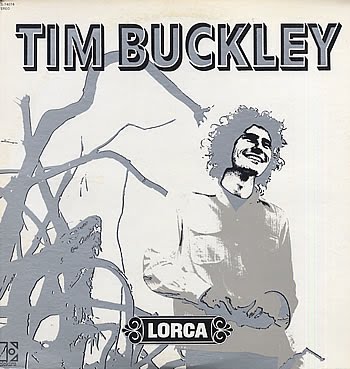
1969 was a pivotal year for Tim Buckley. While up to this point his studio albums had, for the most part, stayed within the Folk genre (although Happy Sad  had incorporated a much more Jazz-informed approach), nothing could have prepared his listeners for the radical transformation that was to unfold on Lorca  and Starsailor, recorded within a few weeks of each other, along with the more recognizable Blue Afternoon, in mid-1969. Nevertheless, Buckley had been exploring a more improvisational live approach since the previous year, as he desired to transcend the limited musical possibilities associated with the Folk and Folk-Rock genres, as well as to escape the label of "folksinger" he had been pigeon-holed with by both his record company and the fans of his recordings. Doing so would lead him out on a creative limb that, while almost completely alienating his fan-base and destroying his commercial viability as a recording artist, would produce some of the most innovative music of the late sixties, some of which belongs in the select company of improvisational albums such as Van Morrison's Astral Weeks.

Tim Buckley
Lee Underwood: "Although Tim was not well educated (a high school graduate), he was a very bright guy. He had a marvelous feel for language, for words and ways to use them, not as an acrobatic academician might, but as extensions of intimate, heartfelt emotion. The more he moved in the direction of free-form instrumental improvisation, the more he explored vocal and verbal improvisations too, spontaneously creating verses and sometimes whole songs on the spot, especially during the Lorca  and Starsailor  period." Live at the Troubadour 1969 catches Buckley at the height of this improvisational period, and with the exception of Dream Letter: Live in London 1968, stands as the best live Buckley recording sonically as well as musically. An obvious highlight is "I Had a Talk with My Woman," which manages to trump the beautiful studio version on Lorca, again proving that Buckley was at his best in a live setting. Wringing emotion out of every note while gliding along to Lee Underwood's jazzy guitar ruminations, Buckley pushes his multi-octave voice to its limits throughout the set, particularly on the epic "Nobody Walkin'," which is extended to sixteen minutes of improvisatory brilliance. Live at the Troubadour 1969 is essential because it captures Buckley in fine form during his most fertile and innovative period, favoring languidly impressionistic explorations over pop-song predictability.

Thursday, September 22, 2011


Tim Buckley Series, #10: Tim Buckley- Blue Afternoon (1970) MP3 & FLAC


"There ain't no wealth that can buy my pride. There ain't no pain that can cleanse my soul."

Following the release of what many believe to be Tim Buckley's most enduring album, Happy Sad, on which Buckley had introduced a new palette of Jazz-inflected textures to his Folk-based aesthetic, he decided the time was right to make some radical changes in both sound and approach. To begin with, during the months he spent touring in support of Happy Sad, Buckley had grown increasingly disenchanted with playing to the expectations of both the music press and his fan-base, both of which, it seemed, were steadfastly invested in seeing him embrace the role of torchbearer for a folk music scene, that, by the late sixties, was quickly losing steam in the U.S. As the tour progressed, Buckley began introducing new material that was based on a highly improvisational minimalist Jazz approach; he simultaneously began exploring new minimalist-informed arrangements of his older material as well. And, inspired by avant-garde vocalists such as Cathy Berberian, Buckley soon began to push his multi-octave voice to new, decidedly un-Folk-like, extremes. He was also at a crossroads in terms record labels: Elektra, whom he owed one more record, was about to be sold by Jac Holzman; his old manager and close friend Herb Cohen was starting a new label, Straight Records, with Frank Zappa; and, as part of a distribution deal, he owed an album to Warner Bros. As a result, in mid 1969, Buckley recorded three albums in one month, two of which he produced himself.

Two of these albums constituted a significant and startling sonic departure for Buckley, as on Lorca and Starsailor, he explored his burgeoning interest in minimalist Jazz using a largely free-form compositional approach. However, Blue Afternoon, recorded immediately after the extremely unconventional Lorca, in many ways reaches back to the sound and approach of Happy Sad. Lee Underwood: "By the time Tim had evolved into the beginnings of his avante-garde phase with Lorca, it was conceptually regressive to go back to Happy Sad's aesthetic perspective for Blue Afternoon." Nevertheless, "[s]ome of Tim's all-time great songs are on that album [....] True, Blue Afternoon was a collection of old songs, but it was not a collection of unreleased out-takes from previous recording sessions. We recorded them new and fresh specifically for that album [....] Tim knew Lorca was unlikely to be a big hit in the marketplace. He loved Blue Afternoon's old tunes, which had found no home elsewhere. He was shifting labels, moving from Elekra to Herb's new label, Straight, and he wanted to help give that label a commercial launch. For all those reasons, Tim and the rest of us worked as hard as we could on Blue Afternoon, even though it was a conceptual step backwards [....] it was also an effort Tim wanted and needed to make."

Underwood might have characterized Blue Afternoon as a case of conceptual regression, but it would be hard to argue that it is anything other than an artistic triumph. While it was critically reviled upon its release, the album has grown in stature to a significant degree in the decades since its release despite being out of print for much of that time, and though it is usually characterized as little more than an extension of the Happy Sad sound, careful listeners will detect subtle signs of Buckley's more avante-garde inclinations occasionally shining through. The Blue Afternoon sessions were recorded in New York City using the same musicians who had worked on Happy Sad with the addition of drummer Jimmy Madison, while many of the songs themselves were compositions that had failed, for one reason or another, to find a place on Buckley's earlier albums but were deemed too good to remain orphans. While the earlier versions of these songs, which can be found on Works in Progress, are beautiful and revelatory in their own right, Blue Afternoon stands as perhaps Buckley's purest distillation of the Folk-Jazz hybrid that he, along with Fred Neil, either invented or entirely transformed. One of the album's gems is "I Must Have Been Blind," which is easily the equal of anything on Happy Sad, and while on one level it is a fine piece of modern Folk, the unconventional choice of instrumentation, especially the prominence given to David Friedman's vibes, lends the song a strange ethereal feel that compliments one of Buckley's more retrained vocal performances. And then there's "Blue Melody," one of Buckley's best compositions and jaw-droppingly beautiful in this languidly jazzed-up version. What makes Blue Afternoon such a timeless album is its emphasis on dynamics, as the loose interplay between vibes, percussion and Buckley's haunting vocals results in a fluid form of musical expression that differentiates this album from virtually anything else falling under the broad categorical term "Folk." Tim Buckley: "Music. It's the total communication between people in a room. You can take me to a political rally and the relationship between the politics and the people is pretty far removed, so that room doesn't cook. I see music and religion- like the gospel thing- and that cooks. But I see the music as separate from God. The people may do it out of praise for God, but what happens in that situation happens because the people are singing their souls out."

Tuesday, September 20, 2011

Wednesday, August 24, 2011


Tim Buckley Series, #9: Tim Buckley- Works in Progress (1999) / The Dream Belongs to Me: Rarities & Unreleased 1968-1973 (2001) MP3 & FLAC


"How can my giving find the rhythm and time of you, unless you sing your song to me? "

Lee Underwood: "Right from the beginning, Tim moved me deeply with his music, his attitude, his intelligence and sense of humour. I played guitar with a number of people back then, but he was different. He was not afraid of change. He kept me and the other musicians on our toes. When he moved into this avant-garde or modern classical dimension, I felt both challenged and thrilled. It was one of the most exciting times of my life." Tim Buckley's creative restlessness can best be gauged through the meteoric arc of his work over the course of his first three albums. From the tentative beauty of his overly mannered debut to the stunningly gorgeous Folk songs of Goodbye and Hello to the Jazz inflected explorations of Happy Sad, Buckley's approach in the studio bore the mark of his iconoclastic tendencies and mirrored the increasingly improvisational nature of his live performances. Once, when asked to what extent his music had changed, Buckley responded, "It's not for me to judge. I'm living too close to it. It's a transition. I have to be ruthless and say what is happening. I'm not sentimental over old songs. I'm constantly writing. The main thing is the music." Buckley's "ruthless" need to push boundaries first came to the surface in an explicit way midway through the 1968 recording sessions that would eventually yield Happy Sad. Early on, Buckley and his band recorded a number of the songs that ended up on the final album, but they did so utilizing traditional Folk-oriented arrangements, nearly all of which were quickly abandoned as the sessions took a very different turn. Most of this material was thought lost, but it was eventually rediscovered in the early nineties, a selection of which materialized in the form of Works in Progress at the end of the decade. While Works in Progress is, for the most part, an album of outtakes, it is nearly as essential as Buckley's studio albums, for, not only does it offer a rare glimpse into his creative process in the studio, but, more importantly, it is comprised of a gorgeous set of songs such as "Danang" and "Ashbury Park," which ended up on the final album as parts of a longer composition, "Love from Room 109 at the Islander (On Pacific Coast Highway)." Both sound as though they would have been revelatory stand alone tracks. And then there's the amazing rendition of "Song to a Siren," one of Buckley's best songs, which would end up appearing on Starsailor in a vastly different, less straightforward, arrangement. This is the song Buckley played during his now-iconic appearance on The Monkees after having been invited by his old friend Mike Nesmith: "They asked me to sing on the show. I went along and there was Mike in his mohair suit, and I turned up in working shirt and trousers. Mike said, 'Hey, you're still wearing the same old clothes.' I replied, 'Yes, and I'm still singing my own songs.'"

Friday, August 19, 2011


A Few Noteworthy Changes to Recent Posts

Hello Everyone,

I've made two important changes to a couple of recent posts, which you may want to check out:

For Tim Buckley Series, #8: Tim Buckley- Happy Sad (1969), I have replaced the links for the 1989 Elektra Edition with links for the 2010 Japanese SHM-CD Remastered edition. Enjoy!


For Suede- S/T (1993) Deluxe Edition, I have added a 31-track audio FLAC rip of the bonus DVD containing two live recordings (Live at Leadmill & Love and Poison)

Sunday, August 7, 2011


Tim Buckley Series, #8: Tim Buckley- Happy Sad (1969) Japanese Remastered Edition (SHM-CD) MP3 & FLAC


"Oh, when I get to thinkin' 'bout the old days when love was here to stay, I wonder if we ever tried. Oh, what I'd give to hold him."

In an early 1969 New York Times interview, Tim Buckley discussed the impending release of the first of his experimental, Jazz influenced albums, Happy Sad: "You know, people don't hear anything. That's why rock 'n' roll was invented, to pound it in. My new songs aren't dazzling; it's not two minutes and 50 seconds of rock 'em sock 'em, say lots of words, get lots of images. I guess it's pretty demanding." If Buckley's previous album, Goodbye and Hello, had been as close as he was willing to come to playing the traditional role of the socially-conscious folk-singer, then Happy Sad was Buckley leaving behind the expectations of both his fans and his handlers at Elektra, in order to chase a sound that simultaneously tapped into the foundational influences of pop music and progressed beyond the melodic and structural limitations of that music. While clearly bearing the influence of Jazz artists such as Miles Davis and Bill Evans (particularly the modal Jazz of Kind of Blue), Happy Sad also features a noticeable transformation in Buckley's approach to integrating his vocals into the arrangements. On songs such as the gorgeous "Dream Letter," Buckley's voice functions more like a lead instrument taking the basic melody and drawing it out through improvised variations, thus guiding the song (often quite subtly) in unexpected/unfamiliar directions, an approach that became the hallmark of his live performances of the time. Happy Sad also marked the end of Buckley's partnership with lyricist and longtime friend Larry Beckett, who had written many of the lyrics for Buckley's first two studio albums. Gone are the overt political references and literary flourishes, replaced by Buckley's more introspective and impressionistic approach, which is, in turn, given a secondary role in support of the music itself. As Beckett recalls, "He was moving toward a jazz sound, so to have wild poetry all over the map, you'd miss the jazz." The jazz sound Beckett speaks of is evident from the very first track, "Strange Feelin'," which, on one level, is clearly paraphrasing Miles Davis' "All Blues," but the song is also replete with textures quite foreign to straightforward jazz, such as Buckley's 12-string acoustic guitar, a sound that allows the music to retain elements of its folk origins. Lee Underwood's bluesy guitar work is also a distinguishing element that, in tandem with Buckley's other-worldly vocals, lends Happy Sad a unique mix of aching beauty and fearless experimentation. These traits are pushed to extremes on the album's centerpiece, the epic and free-styling "Gypsy Woman," which features Buckley completely set free of the structures and conventions governing Western music. This twelve minute song establishes a floating rhythmic sense borrowed from Indian classical music that allows Buckley to take his vocals into uncharted waters. While Happy Sad was only Buckley's first step toward making music that is, as he said, "pretty demanding," it is arguably the high point of, what was to ultimately become, a four album journey into something quite unprecedented (though it should be mentioned that Fred Neil was a major inspiration). Later albums in this vein, such as Blue Afternoon & Starsailor  are certainly classics in their own right, but on Happy Sad, there is a palpable sense of newness, a freedom recently fought for and won, and the beckoning (if only for a brief time) of infinite possibility. Of course, all such things eventually come with a price. Buckley: "My old lady was telling me what she was studying in school- Plato, Sophocles, Socrates and all those people. And the cat, Socrates, starts spewing truth like anybody would, because you gotta be honest. And the people kill him. Ha, I don't know if I'm being pretentious but I can see what happens. It happened to Dylan...I don't know what to do about that."
Monday, July 18, 2011


Tim Buckley Series, #7: Tim Buckley- The Copenhagen Tapes (2000) MP3 & FLAC


"Just like a buzzin' fly, I come into your life. Now I float away like honey in the sun."

Recorded during the same tour that produced the sublime Dream Letter: Live in London 1968, Tim Buckley was in fine vocal form for this October 1968 concert in Copenhagen, Denmark. As was the case throughout his fall 1968 European tour, Buckley was operating with only part of his formidable backing band: percussionist Carter C.C. Collins and stand-up bass player John Miller could not make the trip overseas due to the tour's financial constraints. As a result, and thoroughly in keeping with the improvisatory Jazz-influenced approach of Buckley's music at this point, "local" players stepped in to fill these spots at each stop on the tour. Whereas the show documented on Dream Letter: Live in London 1968 saw The Pentangle's Danny Thompson take over stand-up bass duties to great effect, the concert documented on The Copenhagen Tapes features no less than European Jazz legend Niels-Henning Ørsted Pedersen, who, as a teenager, was so esteemed in Jazz circles that he was extended an invitation to join the Count Basie Orchestra of all things, which, amazingly, he refused. Also present for the Copenhagen concert was Buckley's inimitable sideman Lee Underwood, whose beautiful electric guitar-work, though completely improvised, always functioned as something of a harmonic anchor to Buckley's fearless vocal peregrinations. Buckley's approach to live performances at this point in his career was profoundly influenced by experimental Jazz; as Underwood explains, "For better or worse, Tim gave me and all his other musicians complete freedom. That is, he did not hire us as sidemen to simply play memorized parts. He hired us for our unique approaches to his music. We didn't have any input into the composing part, but the playing was ours alone, nearly all of it improvised." The Copenhagen Tapes is comprised of four lengthy tracks, the first of which, the 21 minute "I Don't Need It to Rain," supposedly intended as a vocal warm-up for Buckley, is nothing less than a tour-de-force. A bluesy slow-burner that finds Buckley frequently exploring the upper range of his seemingly elastic voice, the song also features some great ensemble work from vibe master David Friedman and Underwood. However, it is on the band's gorgeous rendition of "Buzzin' Fly" from Happy/Sad that Underwood's masterful contributions really step forward. Simultaneously carrying the melody and pushing the song beyond its Folk-Rock origins, Underwood's Telecaster weaves a fuzzy web of chiming notes for Buckley's soaring vocals to momentarily embrace and then transcend. In terms of fidelity, The Copenhagen Tapes is not the best-sounding Buckley live recording available; however, it captures him at the height of his improvisational powers, stretching his songs to their compositional limits and beyond, and for this, it is qualifies as essential Tim.

Friday, July 8, 2011


Tim Buckley Series, #6: Tim Buckley- Goodbye and Hello (1967) MP3 & FLAC


"Though you have forgotten all of our rubbish dreams, I find myself searching through the ashes of our ruins."

If Tim Buckley's eponymous debut album  bore, too distinctly, the imprint of Elektra's desire to frame him as a baroque folk-singer with commercial aspirations (though ironically the album was all but ignored upon its release), then Buckley's second LP, Goodbye and Hello, offers a first glimmer of clarity into the restless, complicated, and singular artistic vision he was quickly developing. Buckley was all of twenty when he recorded this album, less than two years removed from playing with some high-school buddies in a band called The Bohemians. As was often the case from album to album during Buckley's career, the artistic leap between his debut and Goodbye and Hello was significant. This was due, in part, to Elektra's generous decision (given the commercial failure of the first album) to give Buckley and his "Recording Supervisor," Jerry Yester, who had previously manned the production booth for The Association, full artistic freedom in the studio. However, just as important to the success of the album was Buckley's personal growth both as a singer (he had developed an amazing vocal range, including a beautiful falsetto) and as a songwriter (he had already begun to abandon the conventions of the Folk-Rock genre he was identified with). Thematically, Goodbye and Hello traverses much darker territory than its precursor by offering a mix of political songs such as "No Man Can Find the War," a lovely pysche-folk Vietnam War protest song that begins ominously with a bomb blast effect and features a beautifully understated vocal performance by Buckley, and soul-baring introspective songs such as the album's indisputable masterpiece, "Phantasmagoria in Two," an infinitely haunting song with the feel of an Elizabethan ballad that explores the kind of fear and distrust that often kills love in its infancy. Although the live version of this song on Dream Letter: Live in London 1968  is arguably more powerful, the studio version has a languid, almost eerie feel that renders it just as essential. Another highlight is "I Never Asked to Be Your Mountain," which manages to capture the frenetic energy of Buckley's live work while subtly pointing the way to his more mature compositions. The song features some dynamic guitar playing from Buckley as he passionately sings to his ex-wife and child (yes, I mean Jeff), trying to explain, or better yet defend, his absence in their lives. Elektra saw big things for Buckley, so much so that the label's owner, Jac Holzman, rented a billboard on the Sunset Strip in Hollywood to promote the album. While Goodbye and Hello enjoyed only moderate commercial success, it raised the ante on the expectations put on Buckley by his record company and by his fans. As Holzman put it: "[T]he combined effect of his words, his music, his passion, his persona struck a particular resonance [....] He could express anguish that wasn't negative." The result of this was the emergence of Buckley's iconoclastic side that fueled his overt rejection of his status as a folk-singer/hippie-generation spokesman. Nowhere is this more clear than in his discussion of Goodbye and Hello's epic title track: "I just hate the motherfucker. It's like, 'OK motherfuckers, you want a protest song, here it is.' They were bugging the hell out of me so I figured, just this once, and then I wouldn't have to do it again."

Friday, June 24, 2011


Tim Buckley Series, #5: Tim Buckley- Honeyman: Recorded Live 1973 (1995) MP3 & FLAC


"And when the bee's inside the hive, you gonna holler in the thick of love. I'll buy you all the jag I can. This honey man's gonna sting you again."

Following the commercial and critical failure of Tim Buckley's now-legendary experimental Jazz-Folk albums, Blue Afternoon and Starsailor, he, to a great extent, withdrew from the music industry in order to deal with severe artistic and financial crises. His eventual return, though initially heralded by another great album, Greetings from L.A., marked the beginning of a slow descent into heroin addiction and a mostly unsuccessful attempt to adopt a more commercially viable sound that would have his career in shambles by the time of his tragic death (from an accidental heroin overdose) in 1975. The unconvincing results of Buckley's awkward embrace of Funk, particularly on his final studio albums, Sefronia  and the utterly forgettable Look at the Fool, were largely attributable to a lack of urgency and of quality on the part of Buckley's songwriting, poor production choices, and uninspired session players. Given such a context, it might seem that a live recording of Buckley from this period would have nothing revelatory to offer, but Honeyman: Live 1973 suggests otherwise. While this recording isn't of the same luminous quality as Dream Letter: Live in London 1968, it does represent a dramatic re-contextualization of Buckley's later work due to arrangements that are far superior to what is found on Sefronia and Buckley's breathtaking vocal performance. The transformation is evident from the first notes of "Dolphins," which was done in by some horribly cheesy backing vocals on the studio version, but here, it is just Buckley strumming an electric 12-string guitar, minimal but effective backing from his band, and a world-weary cadence in his voice that sounds authentically heartbreaking. Even the funkier material benefits from the live setting; for example, "Get on Top," stripped of all the studio-schmaltz, turns out to be a fine vehicle for some of Buckley's trademark soaring vocals. After listening to Honeyman: Live 1973, it seems clear that much of awkwardness of Buckley's late-career studio albums was likely the result of record company pressure to push his music in a more commercial direction. However, Buckley's restless and fiercely original  muse was never a good fit for such an approach, which explains why out on the road, just playing his music, Buckley sounds as masterful and uncontainable as ever.

Friday, June 17, 2011


Tim Buckley Series, #4: Tim Buckley- Sefronia (1973) MP3 & FLAC


"This old world will never change the way it's been."

The purest distillation of Tim Buckley's creative muse is encapsulated in the trilogy of Jazz-inflected experimental albums he released in 1969-1970: Lorca, Blue Afternoon, and Starsailor. These were intensely personal and uncompromising documents of Buckley's unique musical vision, but all three met with a lack of comprehension from critics and a lack of interest from the record-buying public. This period was an extremely tough time for Buckley both personally and financially, as he was crushed by the cold reception to his most ground-breaking works and consequently suffered so much financially that he had to occasionally work as a chauffeur and cab driver to makes ends meet. When Buckley returned to the studio in the early seventies, he had largely left behind the highly improvised Jazz-Folk hybrid he had been exploring since the late-sixties and instead pursued, with decidedly mixed results, his own idiosyncratic version of Funk-inspired Soul. Sefronia  was Buckley's second album in this vein and while the first, Greetings from L.A., still retained, to some degree, his improvisational approach to vocals, its follow-up comes off as a badly (mis)calculated attempt at chasing mainstream success. To begin with, Soul isn't the best vehicle for Buckley's voice, and to make matters worse, he is backed by L.A. session musicians ill-equipped to do justice to the music itself. Nevertheless, we're talking about Tim Buckley here, and that means his voice alone offers some moments of redemption for the album. For example, on the cover of Fred Neil's "Dolphins," a far superior live version of which can be found on Dream Letter: Live in London 1968, Buckley offers an understated performance (by his standards) that, coupled with Lee Underwood's always lovely guitar work, makes for a promising, if not inauspicious beginning to the album; however, towards the end of the song, back-up singers (in the worst sense of the term) leap into the mix and overwhelm the song's fragile emotional content with the kind of cheesiness that is far beneath an artist like Buckley. Things get even worse on "Peanut Man," an awkward attempt at white-boy Funk that will leave permanent cringe-lines on your face. Despite moments like this, Sefronia also contains the two-part title suite, which echos Buckley's experimental work three years earlier. While not of the same caliber as the earlier work, these songs are free of the arrangement-related missteps that sink much of the album, and feature Buckley's multi-octave voice set free from the prison of bad Funk. While nowhere near as accomplished as his earlier work, Sefronia stands as a last glimpse of Buckley's prodigious talents.

Thursday, June 16, 2011


Tim Buckley- "Dolphins" (1974) Live on Old Grey Whistle Test

Here's Tim nearing the end. Still, even in the grip of an escalating heroin addiction that would claim his life the following year, that amazing voice of his still sounds peerless:

Tuesday, May 31, 2011


Tim Buckley Series, #3: Tim Buckley- S/T (1966) Deluxe Edition (Bonus Disc) MP3 & FLAC


"You've got the untortured mind of a woman who has answered all the questions before."

Tim Buckley's eponymous debut has long been saddled with the title "Buckley's most conventional album," and while this may be true to some extent, it should be remembered that such a statement is usually made in reference to Buckley's uncompromising later work, which has a way of making almost anything compared to it sound conventional. In actuality, Tim Buckley, while clearly bearing the imprint of its time, is redolent with hints of the idiosyncratic brilliance that would make Buckley's later albums so distinctive. The album's back-story is the stuff of legend: Buckley, toiling away in an OC band called The Bohemians, takes a drive with some of his band-mates up the 405 to Hollywood to see The Mothers of Invention play. As it turns out, Buckley's bassist had briefly worked in a guitar store with Zappa's then-drummer, who decides to mention The Bohemians to Zappa's then-manager, Herb Cohen. Of course, Cohen recognizes Buckley's genius immediately but has no interest in the rest of the band; thus, Buckley is reborn as a solo artist. Cohen manages to land his new discovery a deal at Elektra, and the label's figurehead Jack Holzman takes a personal interest in the project, enlisting the legendary Paul Rothchild to man the production booth along with engineer Bruce Botnick (they would also helm The Doors' debut around the same time). Holzman spares no expense, bringing in well-known session players (such as Van Dyke Parks and Lee Underwood) and an arranger for strings (the inimitable Jack Nitzsche) to add further ornamentation to the sound. Reportedly recorded in a mere two days, Tim Buckley can best be described as an overly fussed-over, sometimes over-melodramatic, yet often masterful piece of baroque mid-sixties folk-pop. On the lead single, "Wings," Buckley's wonderfully expressive voice marries nicely with the almost-too-pretty arrangement, which is augmented by some gorgeous guitar chime from Lee Underwood. Buckley turns in a powerful performance; his voice often overpowering the syrupy string arrangement. While Buckley's nascent experimental tendencies are mostly kept at bay by Holzman and co., they do flicker into the foreground on "Song Slowly Song," a free-flowing, almost improvisational song that features one of Buckley's more unconventionally understated vocal performances. This is one of those albums that I've tended to overlook, but going back and listening again has reminded me what an impressive debut this was- and then I recall he was all of nineteen at the time!

Wednesday, May 25, 2011


Tim Buckley Series, #2: Tim Buckley- Live at the Folklore Center, NYC, March 6, 1967 (2009) MP3 & FLAC


"The singer cries for people's lies. He will sing for the day to bring him night."

Tim Buckley was one of those musicians whose artistic development from album to album was often dizzying, and while this is what made it possible for him to evolve from the (sometimes) derivative and overly fussed-over sound of his Elektra Debut to the uncompromisingly original Jazz-inflected Avant-Folk of albums such as Blue Afternoon and Starsailor in just four short years, the sheer speed of this trajectory has resulted in his early career being something of an afterthought. In light of the dearth of live recordings from this early period, Live at the Folklore Center, NYC, March 6, 1967 is nothing less than a revelation, as it catches Buckley during his early troubadour phase, gigging in NYC for the first time, and playing a full acoustic solo set. The Folklore Center was ground-zero for the Greenwich Village folk scene of the early sixties, but by 1967, the scene had begun to wane. As a result, proprietor Izzy Young decided to put aside his folk-purist tendencies and invite a west coast act sight-unseen and sound-unheard: enter Tim Buckley. This was Buckley's east coast debut and much to his credit, Young decided to tape the entire show. While not as sonically dazzling as Dream Letter: Live in London, the sound is still excellent, with good detail and very little tape hiss. In terms of Buckley's performance, while he clearly hasn't yet harnessed the power of his amazing voice, which borders on the melodramatic in places, his singular 12-string guitar work and unique vocal phrasings are very much in evidence. While there are many essential moments on this recording, Buckley's faithful cover of Fred Neil's "Dolphins" is a breathtaking preview of the kind of languorous vocal peregrinations that would take center-stage on his late sixties recordings. Also making Live at the Folklore Center, NYC, March 6, 1967 an essential addition to the Buckley discography is the appearance of a number of songs that are exclusive to this recording, including "Cripples Cry," a gorgeous, jangly tale of love lost. This album provides an invaluable counterpoint to Buckley's studio debut, and proves once again that he was at his best in the more improvisational climate of a live setting.

Monday, May 16, 2011


Tim Buckley Series, #1: Tim Buckley- Dream Letter: Live in London 1968 (1990) MP3 & FLAC -For thestarry-


"If you tell me a lie, I'll cry for you, or tell me of sin and I'll laugh."

At the risk of sounding as if I'm lapsing into hyperbole, I will simply put it out there: Tim Buckley's Dream Letter: Live in London 1968 just might be the greatest live album released during the past 40 years. In addition to comprising a complete concert from one of Buckley's most creatively fertile periods, the album is arguably the best thing ever released with Buckley's name on it, as it catches him in top form in a live improvisatory setting, which always suited his uncontainable voice far better than the confines of the studio. Not only this, but the album was impeccably recorded, giving the listener a great sense of the depth and space of the original venue (Queen Elizabeth Hall in London). Most important is the music itself, which features some great players in support of Buckley and his Guild 12-string, including guitarist Lee Underwood, David Friedman on vibes, and the inimitable Danny Thompson (Pentangle) on double-bass. This was supposedly Buckley's first live performance in England and finds him a few months away from releasing his artistic breakthrough Happy/Sad. While the set-list tends to focus on his upcoming album and even more so on his previous album Goodbye and Hello, another calling card for Dream Letter: Live in London 1968 (as if it needed one) is the fact that it contains no less than five tracks that were never to appear on any of Buckley's studio albums. One of these tracks, "Troubadour," is a gorgeous minor-key Elizabethan ballad, featuring some great counterpoint contributions from Lee Underwood. The album also features Buckley's best rendition of the Fred Neil masterpiece, "Dolphins,"  in which he breathtakingly draws out his vocal phrasings, lending the song a languorous beauty that suits it well. This album, in my humble opinion, is Buckley's finest moment on tape, and 21 years after first hearing it, it still continues to amaze and delight me in ways few other recordings can.

Wednesday, May 4, 2011


The Readers Have Spoken (Yet Another Series)

Hello dear readers,

Yesterday, I posted a video of one of my favorite musicians, Tim Buckley. The rapid, passionate and voluminous response to the post convinced me to plan a few Buckley posts in the coming days/weeks; however, Michael suggested a Buckley series. Although there are already two series underway (Talk Talk & Paisley Underground), I feel very motivated to begin work on a third, a Tim Buckley and related series. Buckley died at 28, so his studio recordings are limited, but there are several interesting archival releases and a number of nice live recordings to post. Also, there are some great albums such as Blue Afternoon and Starsailor, which are hard to come by in lossless (I have these), so Buckley has the makings for a potentially great series. And yes, I will also mix in some of Jeff's work. At this point, I am undecided about the length of the series, but it will probably be 10 to 15 posts. I'll get it started in a week or so. I hope this is good news for everyone :)

p.s. I have several Buckley live bootlegs, which might also be a nice addition to this series

Tuesday, May 3, 2011


Tim Buckley- "Song to the Siren" (1968) Live on The Monkees

This is one of Tim Buckley's finest moments- an early acoustic rendition of "Song to the Siren," which many of you will know from This Mortal Coil. And he performs it on, of all places, The Monkees!