Showing posts with label 1970s. Show all posts
Showing posts with label 1970s. Show all posts
Sunday, January 22, 2012


Thursday, January 12, 2012


J0y D1v1sion- The Complete BBC Recordings (2000) MP3 & FLAC

Strange Fruit ~ 2000

The Complete BBC Recordings
Monday, January 9, 2012
Townes Van Zandt- Flyin' Shoes (1978) MP3 & FLAC

Fat Possum ~ 2007/1978
One of the great American singer-songwriters, a man who spent much of his life wrestling with his considerable demons, a man and musician I have endless admiration for. If you haven't explored his work previously, then now is the time ~ R.I.P. TVZ

Flyin' Shoes in FLAC: Grab, Try, Then Buy!
Wednesday, January 4, 2012


Monday, January 2, 2012
The Hot Dogs- Say What You Mean (1973) Japanese Remaster (Roots of Power Pop Series) MP3 & FLAC

JVC Victor Japan ~ 2003/1973
The Hot Dogs were a Memphis power-pop band and label-mates with Big Star at Ardent Records in the early seventies. While lacking the edgy off-center quality of the legendary work of Chris Bell and Alex Chilton, The Hot Dogs' brand of power-pop was more obviously influenced by Memphis soul. Lead guitarist and producer Terry Manning did a wonderful job of giving this album the same sumptuous sound that is found on Big Star's debut (which he also had a hand in creating). A rare Memphis power-pop gem that you don't want to miss if you like Big Star.

Say What You Mean (Japanese Remaster) in FLAC: Grab, Try, Then Buy!

Tuesday, November 15, 2011
Isao Tomita- Snowflakes Are Dancing: Electronic Performances of Debussey's Tone Paintings (1974) / Pictures at an Exhibition (1975) / Firebird (1975) MP3 & FLAC

Isao Tomita: "[I]n painting the artist is free to use whatever color or material he may choose. In other words the medium for his expression on the canvas is free and unlimited. There are plenty and abundant mediums, whereas in music we have had to use very limited means: the musical instruments. In painting one could use unlimited variety in color, but in music only certain numbers of timbres were available to express composers' ideas and feelings [....] My doubt was, should music be always like this? Couldn't it get some new source of sound beyond existing musical instruments? That was my doubt and at the same time my dream." After having spent the formative years of his childhood with his father in China during the 1930s, Tomita returned to the place of his birth, Tokyo, eventually studying Art History at Keio University during the early 1950s while also taking private lessons in Music Composition and Orchestral Theory in order to pursue his overriding passion for music. Having already paid his dues by regularly composing for local orchestras in order to fund his education, by the time Tomita graduated, he had amassed an impressive amount of experience and skill, which allowed him to quickly transition into a career scoring films, television and theatre, something he pursued for the next 15 years until hearing Walter Carlos' groundbreaking Classical work on the Moog synthesizer. Tomita: "In 1969 I happened to listen to a record titled Switched on Bach which opened a new world to me and triggered a revolution in my musical life. At the time I saw on the jacket of the record, behind Bach, a synthesizer, which is to say a palette of sound. For the first time I discovered that the synthesizer is not an instrument to compose music by using the sounds of existing instruments, but is a new instrument or a new machine which creates unlimited sound sources."
Inspired by Carlos' groundbreaking work, Tomita purchased a Moog III synthesizer (identical to the one pictured on the Switched on Bach album cover) and built a recording studio in his home shortly after forming a music collective called Plasma Music with several other Electronic-minded musicians. After a false start in the form of a largely forgettable album of Moog renditions of contemporary rock songs, Tomita turned his attention to the work of French composer Claude Debussy, and, in contrast to Carlos' emphasis on note-for-note transcription as well as the recreation of traditional acoustic sounds using the new Electronic medium, Tomita's work, perhaps due to his extensive experience as a composer, focused on re-conceptualizing the source material using the infinite array of new musical possibilities inherent in the new Electronic medium. The result was Snowflakes Are Dancing: Electronic Performances of Debussy's Tone Paintings, an album that proved to be both a revolutionary step forward in synth-based programming and a considerable commercial success. Tomita on the approach and response to the album: "I never expected that so many albums would be sold, but to tell the truth I was expecting something different and I had, if I may say, some revolutionary intention or theory when making this music [....] Walter Carlos' emphasis when realizing Debussy was on the level of mere description and depicting [....] My emphasis was more on the timbre or color of the music [....] it was kind of an experiment for me. I experimented with my theory to create first the color of the sound which the conventional instruments never could bring out [....] The intention of my playing was that with a synthesizer I could break the limitations of such instruments and go into the unlimited world, and I started with the color of the sound, and the result was this piece. But we are going beyond even the color; we are going to the form of music composition and finding new aesthetic rules and creating a new world of music."
The most obvious difference between the work of Tomita and that of earlier attempts to re-interpret Classical pieces within an Electronic context is Tomita's ability to create a polyphonic sound despite the fact that polyphonic synthesizers were not commercially available when he recorded his most innovative work. He did this by painstakingly recording every part separately and meshing these parts together to lend his Electronic arrangements a symphonic depth missing on albums such as Switched on Bach. In addition, Tomita, especially on later albums such as Pictures at an Exhibition, Firebird, and his interpretations of Holst, avoids any conventional sense of reverence in his approach to the source material, as he treats them more as starting points for his exploration of new musical possibilities than monuments to be draped in synthetic raiment. Tomita: "In this kind of situation, music and, for instance, painting are different. There is one painting, one masterpiece, say. If another painter adds color or a line to this original painting, it is destroyed. But it is quite different with music. In music there may be one original score, but there may be thousands of scores of the same composition, and there will be hundreds and thousands of other composers and arrangers who may rearrange the original music; who may add something to the original, who may extract something from it [....] I don't think it's a problem which endangers or destroys the original score [....] If one plays a score, each player will interpret it differently and each conductor performs it differently, and you cannot limit or tell the conductor exactly how the original composer imagined it. The music score itself is loose." For Tomita, music cannot be mathematically reduced to a finite set of relationships between notes and between tones. As such, every composition potentially points the way to what he calls the "unlimited world," which, as with the act of interpretation, is infinite.
 |
| Walter Carlos tending to his Moog III |
 |
| Isao Tomita relaxing in front of his Moog III |
Monday, November 14, 2011
Neil Young- "Old Man" (1971) Live BBC Performance
What more can be said about the genius of Neil Young?
Friday, October 28, 2011
Mo-Dettes- "White Mice" Video (1979)
Not as well-known as The Slits or The Raincoats, the Mo-Dettes were founded by Kate Korus who was a veteran of both bands. In contrast to these, the Mo-Dettes featured a punky psych-pop sound that anticipated everything from The Go-Gos to The Pandoras to The Vivian Girls, but their sound also had that early Punk vibe that their followers could never hope to equal.
Friday, October 7, 2011
Terry Manning- Home Sweet Home (1970) MP3 & FLAC

"I got a Mazerati GT with the snakeskin upholstery. I got a charge account at Goldsmith,
but I ain't got you."
but I ain't got you."
As a teenager, Terry Manning emigrated from El Paso (where he had played in several bands with Bobby Fuller of "I Fought the Law" fame) to Memphis and somehow talked Stax Records producer and master session guitarist Steve Cropper into making him an assistant engineer at the legendary label after having simply walked in off the street one day. Manning quickly became a mainstay at Stax, going from sweeping up and making tape copies to gaining a reputation as a sought after engineer and producer in a matter of only a few years. The extent of his reputation can be gleaned from the list of artists whose best albums he had a hand in shaping, including Ike & Tina Turner, Otis Redding, The Staple Singers, and The Box Tops (to only name a few). As many of Stax's recordings were cut and mixed at neighboring Ardent Studios owned and operated by John Fry, Manning became a fixture there as well, eventually leading Fry to make him the studio's first official employee by hiring him to be Ardent's chief engineer and manager. Terry Manning: "Neither studio had a problem with this arrangement [....] In the musical sense, Memphis was fairly isolated [...] Its music style was homegrown, even though technically we were trying to emulate the big boys in London, New York and Los Angeles. Musically, Stax was doing what it liked, and together with Ardent we were just one big happy family of people wanting to do music." During this time, Manning was also an active participant in the local Memphis music scene, playing in various bands and befriending many of the musicians who would later craft, with the help of Manning and Fry's willingness to give them free access to Ardent's state-of-the-art recording equipment, the Power-Pop sound that characterized early-seventies Ardent bands such as Big Star, The Hot Dogs and Cargoe.

Wednesday, October 5, 2011
Bert Jansch / Ralph McTell- "Moonshine" (1975) Live Television Performance
While all the headlines are going on about the death of Steve Jobs, today saw another death that is far more significant to me- perhaps the greatest folk guitarist I've ever heard, Bert Jansch. Rest in peace Bert, I've learned much from you and you will be greatly missed.
The Slits- "Typical Girls" Video (1979)
Dubby post-punk madness- one of my all-time favorite "girl groups"
Wednesday, September 28, 2011
David Bowie- "Be My Wife" Video (1977)
Classic Bowie from his "Thin White Duke" years. This song can be found on the first album of the Berlin Trilogy, Low:
Monday, September 26, 2011
Adam and The Ants- Dirk Wears White Sox (1979) / Kings of the Wild Frontier (1980) / Prince Charming (1981) / Peel Sessions (1991) MP3 & FLAC

"You may not like the things we say, what's the difference anyway?"
Adam Ant: "Look, I'm a punk rocker. I always was; I'm not a New Romantic. But I was a punk rocker who wanted to get more than one fuckin' album. The Pistols were great, but they only did one fuckin' album. Not enough! Sorry!" It's easy to forget how fleeting the original U.K. Punk scene was before the media storm over The Sex Pistols' infamous appearance on Thames Today turned the whole thing into a simultaneously demonized and co-opted caricature of itself. In addition, with its prized rejection of technical proficiency as a criterion for musical expression (a philosophy that opened the scene to virtually anyone with a guitar, something to say and the bollocks to say it), few of the participants in the early Punk movement were interested in thinking about the music in careerist terms, as "no future" was more than just a catch phrase; it was an ethos. However, as many of the original Punk bands began recording albums and developing as musicians as well as song-writers, the aesthetic limitations of the basic Punk sound- three chords played really hard and really fast- became apparent; as a result, bands such as The Clash, The Damned, Siouxsie & The Banshees and Penetration (to name only a few) began experimenting with and integrating other musical elements and influences into their work.
 |
| Malcolm McLaren |
The new music scene (not yet labeled "punk") began to catch fire in early 1976, and Adam Ant, then known as Stewart Goddard, had recently dropped out of prestigious Hornsby College of Art to pursue a music career, a venture that originally took the form of playing bass in a pub band called Joe and The Bazookas. However, during one of their gigs, an opening band called The Sex Pistols changed everything. Inspired by what he had seen and heard, Goddard soon adopted his famous moniker and made a number of abortive attempts to form his own band. It was during this time that Adam Ant found his way into the orbit of the burgeoning Punk scene's uber-elite, who congregated at Malcolm McLaren and Vivienne Westwood's fashion boutique SEX. Ants guitarist Marco Pirroni: "Without the shop [...] there would have been no punk, no Sex Pistols, just a load of pub bands who would have made no impact on anything. Malcolm is of course a complete liar but what is true is that he invented the punk attitude and made the Pistols act it out for him [....] To ask how important clothes were to the early scene (not called punk, not called anything in fact) is ridiculous. Clothes were the scene. It was not fashion; it was totally anti-fashion to everything that was going on at the time. The scene was tiny and totally hated the outside world [....] It was about telling the world that you weren't what it wanted you to be; you weren't anything except what you wanted to be. And what better way to tell England that you would not accept any of its upper class, lower class, middle class know your place, we are your elders and betters, fucking feudal society than wearing offensive pornographic clothes on the street?"
 |
| Adam Ant in his punk phase |
Adam Ant's most important connection at SEX was Jordan (Pamela Rooke) who, in addition to being one of the original architects of the now-iconic look of the London punks, served as Ant's manager and occasional vocalist after he formed Adam and The Ants in the spring of 1977. In many ways, this early version of the Ants stood in stark contrast to their Punk scene contemporaries, as they adopted a very theatrical stage presence (something that would also characterize the band's later, more pop-oriented incarnation) and employed explicit sadomasochistic imagery both lyrically and visually. It was these tendencies and Jordan's connections that landed Ant a part in the Derek Jarman film Jubilee, which also featured the band playing a particularly chaotic version of "Plastic Surgery." Due to a number of line-up changes, work on the Jubilee soundtrack, and a dispute with their soon-to-be ex-record label Decca, Adam and The Ants didn't get around to releasing their debut album until the fall of 1979. The self-produced Dirk Wears White Sox is easily the darkest and most divisive album of Adam Ant's career, and while many portray the debut as having little relation to the more polished, energetic, chart-savvy work that followed it, the chaotic blend of Glam excess, Punk minimalism, and Post-Punk melancholy that characterizes songs such as "Cleopatra" and "Tabletalk" does occasionally hint at the direction Adam and a new set of Ants would take a year later on Kings of the Wild Frontier.
 |
| Post-Punk Pirate |
Despite gaining the band a sizeable cult following, Dirk Wears White Sox was a commercial failure, which greatly disappointed Adam Ant, as chart success was something he had desired all along: "I wanted to be a graphic designer until I saw the Sex Pistols play live. This was 1975. That's when I knew I wanted to be a pop star, and that for me was like being a matador, a boxer." In an effort to change the band's commercial (mis)fortunes, Ant approached Malcolm McLaren about becoming the band's manager, the result of which was McLaren convincing the Ants to jump ship in order to form Bow Wow Wow with 14-year old lead singer Annabella Lwin. It was also around this time that McLaren had given the soon-to-be ex-Ants some world music recordings from which to gain inspiration for their next recording project, including The Royal Drummers of Burundi. When Adam Ant caught wind of his band's planned defection, he reportedly took these recordings with him to utilize with his new band, which, in addition to guitarist Marco Pirroni, also included two drummers. Once the new version of the band had been assembled, they were now in direct competition with Bow Wow Wow to record a batch of songs employing the Burundi-style percussion, a race Adam and The Ants won easily by, irony of all ironies, adopting a McLaren-style media-savvy image (Native-American pirate dandys) and releasing Kings of the Wild Frontier, an album that would make Adam Ant the pop star he so badly wanted to be.
Simply put, Kings of the Wild Frontier sounded like nothing else at the time. Displaying the same brand of androgynous swagger that had characterized the best of the Glam scene nine years earlier, employing stripped-down Burundi beats, Duane Eddy riffs, Native American chants, and a mish-mash of historical allusions, the second incarnation of Adam and The Ants managed to tap into the ominousness of the debut album while offering up a great slab of irresistible pop that was as daring as it was derivative, as biting as it was cartoonish. Nowhere is this summed up better than on the lead track "Dog Eat Dog," a song that clearly signals a new day has dawned for Adam and The Ants, as it goes far beyond anything on Dirk Wears White Sox in terms of accessibility. Beginning with a prelude of tribal beats mixed with whistles and howls, Pirroni's dark, spaghetti western guitar twang soon kicks in to set the stage for Adam Ant's defiant opening ultimatum: "You may not like the things we do, only idiots ignore the truth." Despite the tremendous commercial success of Kings of the Wild Frontier, the band only recorded one more LP together, Prince Charming, before Adam Ant embarked on his circuitously ill-fated solo career, and while the album features a few of the Ants' best songs, such as "Stand and Deliver" and the title track, overall it lacks the consistent quality of songcraft that made the previous album so memorable. Ultimately, there is one question that always seems to linger about when trying to re-evaluate Adam and The Ants: vacuous foppish trash by a Punk sell-out hell-bent on becoming a pop star? or a masterful re-imagining of the kind of image manipulation that defined the Glam-era married to an unapologetically post-modern bricolage of disparate cultural signifiers all woven into something daring, entirely disposable and eternally delicious? Can the answer be both?
Thursday, September 22, 2011
Tim Buckley Series, #10: Tim Buckley- Blue Afternoon (1970) MP3 & FLAC

"There ain't no wealth that can buy my pride. There ain't no pain that can cleanse my soul."
Following the release of what many believe to be Tim Buckley's most enduring album, Happy Sad, on which Buckley had introduced a new palette of Jazz-inflected textures to his Folk-based aesthetic, he decided the time was right to make some radical changes in both sound and approach. To begin with, during the months he spent touring in support of Happy Sad, Buckley had grown increasingly disenchanted with playing to the expectations of both the music press and his fan-base, both of which, it seemed, were steadfastly invested in seeing him embrace the role of torchbearer for a folk music scene, that, by the late sixties, was quickly losing steam in the U.S. As the tour progressed, Buckley began introducing new material that was based on a highly improvisational minimalist Jazz approach; he simultaneously began exploring new minimalist-informed arrangements of his older material as well. And, inspired by avant-garde vocalists such as Cathy Berberian, Buckley soon began to push his multi-octave voice to new, decidedly un-Folk-like, extremes. He was also at a crossroads in terms record labels: Elektra, whom he owed one more record, was about to be sold by Jac Holzman; his old manager and close friend Herb Cohen was starting a new label, Straight Records, with Frank Zappa; and, as part of a distribution deal, he owed an album to Warner Bros. As a result, in mid 1969, Buckley recorded three albums in one month, two of which he produced himself.

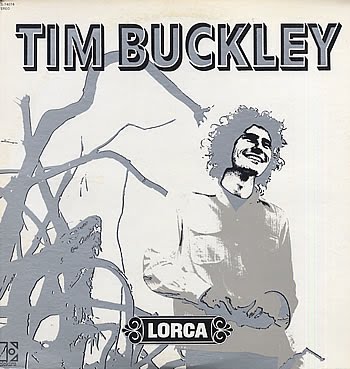
Two of these albums constituted a significant and startling sonic departure for Buckley, as on Lorca and Starsailor, he explored his burgeoning interest in minimalist Jazz using a largely free-form compositional approach. However, Blue Afternoon, recorded immediately after the extremely unconventional Lorca, in many ways reaches back to the sound and approach of Happy Sad. Lee Underwood: "By the time Tim had evolved into the beginnings of his avante-garde phase with Lorca, it was conceptually regressive to go back to Happy Sad's aesthetic perspective for Blue Afternoon." Nevertheless, "[s]ome of Tim's all-time great songs are on that album [....] True, Blue Afternoon was a collection of old songs, but it was not a collection of unreleased out-takes from previous recording sessions. We recorded them new and fresh specifically for that album [....] Tim knew Lorca was unlikely to be a big hit in the marketplace. He loved Blue Afternoon's old tunes, which had found no home elsewhere. He was shifting labels, moving from Elekra to Herb's new label, Straight, and he wanted to help give that label a commercial launch. For all those reasons, Tim and the rest of us worked as hard as we could on Blue Afternoon, even though it was a conceptual step backwards [....] it was also an effort Tim wanted and needed to make."
Underwood might have characterized Blue Afternoon as a case of conceptual regression, but it would be hard to argue that it is anything other than an artistic triumph. While it was critically reviled upon its release, the album has grown in stature to a significant degree in the decades since its release despite being out of print for much of that time, and though it is usually characterized as little more than an extension of the Happy Sad sound, careful listeners will detect subtle signs of Buckley's more avante-garde inclinations occasionally shining through. The Blue Afternoon sessions were recorded in New York City using the same musicians who had worked on Happy Sad with the addition of drummer Jimmy Madison, while many of the songs themselves were compositions that had failed, for one reason or another, to find a place on Buckley's earlier albums but were deemed too good to remain orphans. While the earlier versions of these songs, which can be found on Works in Progress, are beautiful and revelatory in their own right, Blue Afternoon stands as perhaps Buckley's purest distillation of the Folk-Jazz hybrid that he, along with Fred Neil, either invented or entirely transformed. One of the album's gems is "I Must Have Been Blind," which is easily the equal of anything on Happy Sad, and while on one level it is a fine piece of modern Folk, the unconventional choice of instrumentation, especially the prominence given to David Friedman's vibes, lends the song a strange ethereal feel that compliments one of Buckley's more retrained vocal performances. And then there's "Blue Melody," one of Buckley's best compositions and jaw-droppingly beautiful in this languidly jazzed-up version. What makes Blue Afternoon such a timeless album is its emphasis on dynamics, as the loose interplay between vibes, percussion and Buckley's haunting vocals results in a fluid form of musical expression that differentiates this album from virtually anything else falling under the broad categorical term "Folk." Tim Buckley: "Music. It's the total communication between people in a room. You can take me to a political rally and the relationship between the politics and the people is pretty far removed, so that room doesn't cook. I see music and religion- like the gospel thing- and that cooks. But I see the music as separate from God. The people may do it out of praise for God, but what happens in that situation happens because the people are singing their souls out."
Tuesday, September 20, 2011
Tim Buckley- "Blue Melody" (1970) Live on Boboquivari, KCET
Buckley & Lee Underwood playing live- this exemplifies the word "sublime"...
Saturday, September 17, 2011
Suicide- from the documentary "Punk Attitude"
Here's a taster for an upcoming post: Alan Vega & Martin Rev's legendary proto-post/punk duo Suicide, whose collected works are the only music I keep on my iPod (for long train trips and family gatherings)
Saturday, September 10, 2011
The Undertones- S/T (1979) / Hypnotized (1980) MP3 & FLAC

"I'm a little intellectual, someone who knows it all. I could be your summer special, you could be my New York Doll."
The back-story of The Undertones is the kind of thing that makes rock music so endlessly intriguing and endearing: five teenage friends (including two brothers) from Derry, Northern Ireland form a band in the mid-seventies to play Beatles and Lindisfarne covers, but in the wake of the Ramones' legendary July, '76 British tour and its aftermath, everything changes- the Punk revolution arrives, and a few short years later, after sending a demo to John Peel requesting he play their music on his BBC radio show, the band, now called The Undertones, has a hit single called "Teenage Kicks." However, being a Punk band in Northern Ireland in 1978 was a difficult proposition, as lead guitarist Damian O'Neill recalls: "We were out on a limb [....] We felt stranded in Derry. There was a bit of a scene in Belfast, but there was nothing going on where we lived. And we were getting a lot of crap and abuse on the street for doing the music that we did [....] We wouldn't dress the way that punks did in London, but just wearing straight jeans could get your head kicked in. And having short hair [....] We were singled out a lot just for being punk rockers. On the back of the Teenage Kicks EP, there's a photo: 'The Undertones Are Shit.' That's genuine. That's the kind of feeling we got from people.'" Much like fellow early punkers the Buzzcocks, The Undertones were as deeply influenced by mid-sixties pop and Garage-Rock as they were by the vanguard of the burgeoning Punk scene, such as The Damned and The Sex Pistols. Their sound, which has been described as "punk-pop," followed, at least on their first two albums, a very similar approach to the Ramones, in the sense of marrying sixties-style pop hooks to a more aggressive style and a faster beat. However, hailing from Northern Ireland, which at the time was rife with political violence, this got them into trouble because their music refused to make overt references to the political situation. Damian O'Neill: "We loved fifties and sixties rock and roll, and girl groups like The Shirelles, and then of course The New York Dolls and MC5. We wanted to write about love and girls nor bombs and bullets." What also set The Undertones apart was their lead singer Feargal Sharkey, whose quavering vocals were equally adept at snotty sarcasm and wide-eyed vulnerability, a voice whose unconventionality in the context of the Punk scene helped give the band its unique sound.

Thanks to John Peel's tireless efforts to gain the band some radio exposure, they were signed by Sire (which made them label-mates of their idols the Ramones), and soon thereafter made their first trip to London to commence working on their debut LP, The Undertones. O'Neill: "The first time you're ever in London, your eyes are wide open. It was a great atmosphere, and the camaraderie was great. It was probably the best time, you know? The best time in the band." The album itself is a peerless piece of simple yet enduring stripped down pop that, coupled with the band's punk sensibilities, presents them as something like Northern Ireland's version of the early Kinks. A perfect example is the brilliant opening track, "Family Entertainment," which, while brimming with Punk energy, also demonstrates wry lyrics and a keen melodic sense- neither of which were exactly hallmarks of the early U.K. Punk scene. While for the most part, The Undertones, on their debut, are content to crank out unforgettable teenage anthems such as "Here Comes the Summer" and the iconic single "Teenage Kicks," they do occasionally tread upon darker territory, such as the suicide lament "Jimmy Jimmy," which has the influence of the Ramones written all over it. Despite their popularity, The Undertones were not a well-loved band in many quarters due to a perceived lack of Punk credibility, part of which was due to Sharkey's vocal style, but also the band's resistance to politicizing their work (something which led to a minor feud with fellow Irish punkers, Stiff Little Fingers from Belfast). The band would famously reference this lack of respect as well as the pressures of trying to come up with a second act after their debut in the mockingly brilliant title of the lead track from their equally accomplished second album, Hypnotised. "More Songs About Chocolate and Girls" instantly demonstrates The Undertones' growing ability as song-writers, which, throughout the album, pushes them beyond the limitations of the Punk aesthetic that defined the first album. Songs such as "My Perfect Cousin," and the Jangle-Pop masterpiece "Wednesday Week," are indicative of the artistic growth the band would continue to undergo over the course of their next two albums, though sadly, it would also spell their end, as an eroding fan-base (hugely undeserved) and internal strife led to Sharkey's exit in 1983. Sharkey: "One of the reasons I left when I did was that I wanted to preserve The Undertones for people as something special. Listening to people saying, 'I was in a bad part of my life and listening to your album helped me through it' is a great feeling. That's the biggest achievement I've ever had, to affect people's lives [....] No matter what you do, your life will eventually fall into a certain routine and its good to get released from that for three and a half minutes."
Monday, September 5, 2011
Brian Eno- Here Come the Warm Jets (1973) / The Winkies (Bootleg) MP3 & FLAC

"Oh perfect masters, they thrive on disasters. They all look so harmless
till they find their way up there."
Brian Eno on the random circumstances leading to his tenure in Roxy Music: "As a result of going into a subway station and meeting Andy [Mackay], I joined Roxy Music, and, as a result of that, I have a career in music. If I'd walked ten yards further on the platform, or missed that train, or been in the next carriage, I probably would have been an art teacher now." Although initially, Eno's role in the band was behind the scenes as "Technical Adviser" due to his lack of experience as a performing musician, it didn't take long for him to join his Roxy Music band-mates on stage where he quickly evolved into one of the most flamboyant figures on the British Glam scene (which was an achievement in itself). Truth be told, Eno was never going to last long as part of the supporting cast for a figure like Bryan Ferry, who was becoming more and more concerned with mainstream success just as Eno was trying to push the band in a more artsy, proggy direction. Eno: "My position in Roxy Music was always half-way between the musical and the theoretical. I was never the sort of person who could sit down at the piano and hammer out a song, or says, 'Here man, play this.' I'm much more interested in talking about the ideas behind the music. Working things out from the aesthetic." Things came to a head immediately following the tour in support of Roxy Music's second album, For Your Pleasure, when Eno as well as several other band members expressed concern over Ferry's increasingly domineering control of the band's direction. What resulted was Eno's June, 1973 departure from Roxy Music and the beginning of one of the most innovative and uncompromising solo careers of the rock era.

Brian Eno: "I'm always prone to do things very quickly, which has distinct advantages- you leave all the mistakes in, and the mistakes always become interesting. The Velvet Underground, for example, are the epitome of mistake-filled music, and it makes the music very subtle and beautiful." As would prove to be his habit throughout the remainder of the seventies, Eno took very little time after exiting Roxy Music to finish his first solo LP, Here Come the Warm Jets. Armed with a highly suggestive title, which, in an infamous NME interview with future-Pretender Chrissie Hynde, Eno hinted might refer to the dreaded "golden shower," the album was all but guaranteed to turn heads, but Eno's time in Roxy Music had also garnered him quite a following among critics; all of this helped make his debut one of the most commercially successful albums of Eno's career. The sessions for Here Come the Warm Jets included Roxy Music sans Ferry, Robert Fripp & John Wetton from King Crimson, as well as members of Hawkwind and Pink Fairies, and aside from taking over lead vocals (for the first time), Eno was apparently content to reprise his Roxy-era role of master sound processor, something which lends the album its uniquely manic feel. While in some ways the album is clearly grounded in the artier margins of the U.K. Glam movement, which had more or less defined the early seventies but by late '73 was beginning to lose steam, in other ways, its avant-garde flourishes and heavily processed sound are anticipatory of the Post-Punk and Shoegaze movements that would respectively punctuate the closing years of the seventies and the eighties. Among the album's many standouts, none is as instantly memorable and confounding as "Dead Finks Don't Talk," a song which Eno has admitted was, at least on an unconscious level, a riposte directed at Ferry. With its military drum beat, darkly humorous lyrics, lovely piano part, heavily distorted guitars, and multitude of vocal effects (including an Elvis impersonation by Eno), it is a tour de force in tension-building and integrating the unexpected. The loveliest song on Here Come the Warm Jets is "Some of Them Are Old," which sounds almost like late-period Beatles with its psychedelic organs and multi-tracked vocals, but what really sets the song apart is the off-kilter Hawaiian-style guitar solo that sounds like it's being played underwater. Eno's early pop-oriented solo albums are often a shock to those who are only familiar with his ambient work; however, they stand as some of the most inventive and prescient records of the Glam-era. Eno: "I'm more of a technologist, manipulating studios and musicians in a funny way. It sounds fantastic but one of the things I tried to do with Warm Jets was to bring musicians together who would normally never play together and to play a music that they couldn't agree upon. The music would come from the chemistry."
Friday, September 2, 2011
Peter Hammill- "German Overalls" (1973) Live in the Studio, Rock en Stock
Peter Hammill, who was a key member of the seminal Art-Rock group Van der Graaf Generator, is a recent obsession of mine. There are few things in life more pleasurable than discovering a brilliant new band/artist with an immense discography to get lost in. Look for a few Hammill posts in the near future.
Subscribe to:
Posts (Atom)