Showing posts with label Martin Hannett. Show all posts

Friday, August 5, 2011


Pauline Murray & The Invisible Girls- S/T (1980) MP3 & FLAC -Thank You Cudawaver!-


"Exteriors are never real, nobody shows just what they feel."

From the barely controlled (but still beautiful) punk rage of "Don't Dictate" to the often convincing Patti Smith-isms of Moving Targets  to the lush Post-Punk of her solo debut, Pauline Murray & The Invisible Girls, Pauline Murray proved herself to be one of the most gifted vocalists of the Punk/Post-Punk era, who, in terms of ability, was easily the equal of her closest contemporary, Siouxsie Sioux, but in terms of career fortunes, was fated to play the role of obscure cult artist. After the acrimonious demise of Penetration, whose final album, Coming Up for Air, was a critical and commercial disaster to put it mildly, Murray found herself without a band or a record deal but with a reputation that all but guaranteed her a certain level of creative autonomy on her next project. This project would materialize after a move from Newcastle to Manchester with ex-Penetration band-mate and boyfriend, bass player Robert Blamire. While the move was ostensibly to find a more artist-friendly environment, Manchester also happened to be the home of producer Martin Hannett, who, during the course of the preceding two years, had made quite a name for himself as the sonic architect of Joy Division's iconic albums, Unknown Pleasures  and Closer. Hannett's unorthodox recording methods and Svengali-like presence in the production booth had lent Joy Division's work a unique and unprecedented approach to creating a sense of spatiality in the music, something he had borrowed from Dub Reggae artists such as Lee "Scratch" Perry. After deciding to work with Murray, Hannett coupled her with his "house band," The Invisible Girls, which included Hannett on bass, Vini Reilly of Durutti Column fame on guitar, and Buzzcocks drummer John Maher. In contrast to Hannett's better known work with Joy Division, Pauline Murray & The Invisible Girls is, unapologetically, a pop record, but one that dresses its uniformly excellent songs in ethereal textures and dark, often edgy hues. This works to great affect on the opener, "Screaming in the Darkness," which bears the imprint of Hannett's obsessive emphasis on creating space between the various instruments and features one of Murray's most memorable vocal performances, managing to sound fey, melancholic, and stunningly beautiful all at once. And then there's the lovely first single, "Dream Sequence I," one of the poppiest moments on the album to be sure, though Hannett's arrangement is still off-kilter enough to give it some edge. Maybe more so than any other song on the album, "Dream Sequence I" makes it clear that Murray had finally found a sympathetic setting for her soulfully sad voice, especially as she belts out the devastatingly catchy chorus that makes the song impossible to forget. While listening to Pauline Murray & The Invisible Girls more than thirty years after it was first released, it is hard not to wonder how Murray failed to become one of the bigger names of the Post-Punk movement, as much of the album seems anticipatory of (if not a direct influence on) many of the paths Post-Punk was to take later in the decade. Needless to say, this album is, without a doubt, one of the great lost gems of the early eighties.

Tuesday, June 28, 2011


J0y Divisi0n- Unkn0wn Ple@sures (1979) Collector's Edition (Bonus Disc) MP3 & FLAC


"Directionless so plain to see, a loaded gun won't set you free, so you say."

Joy Division is often touted as the point of origin for Post-Punk. While this may not be entirely accurate (there were many points of origin for this movement), there is no denying that Ian Curtis' emotionally harrowing lyrics and tense baritone croon effectively turned Punk's aesthetic of rage and aggression inward, deconstructing his own emotional, physical, and psychological struggles in a candid way completely unprecedented within the context of the Punk movement. However, Joy Division's live sound, especially at the time they recorded their debut, Unknown Pleasures, still clearly bore the imprint of their Punk roots, though Peter Hook's melodic bass-work, which would become a defining element of the band's mature sound, was already in evidence on a few songs. By all accounts, the groundbreaking sound of Joy Division's debut (which some members of the band were not entirely enamored with at the time of the album's release) owes much to the brilliant production work of Martin Hannett, who saw the sonic possibilities inherent in the band's sound and decided to push them beyond the aesthetic confines of Punk austerity. Hannett did nothing to temper the band's dark abrasiveness; however, he lent the album a sense of eerie spaciousness by insisting that every instrument be recorded in isolation to enhance the definition of the individual elements comprising the songs, an approach quite antithetical to what was generally found on Punk recordings of the time. Exemplary of this unprecedented sound is the brilliant "shadowplay," which fades in with Hook's bass setting up the basic melody in concert with Stephen Morris' shimmering cymbals. These serve to increase the song's tension until Bernard Sumner crashes in with a jagged guitar chord and Ian Curtis's bellowing vocals issue-forth sounding as if emanating from regions unknown, both of which threaten to push the song into more familiar Punk territory, except that the lyrics and sonic depth of the mix refuse to let it acquiesce to predictability. Even more stunning is "She's Lost Control," Curtis' chilling account of the physical and psychological struggles of a fellow epileptic. With its strange almost industrial disco beat and Hook's iconic descending bass melody, the song more than lives up to the album's title, as Joy Division have clearly moved into entirely new sonic territory here, a sound that both set the bar for the initial wave of Post-Punk bands and presaged the direction the band would take (as New Order) after Curtis' tragic suicide. Simply put, Unknown Pleasures is one of the most important and original albums of the rock era.

Sunday, May 29, 2011


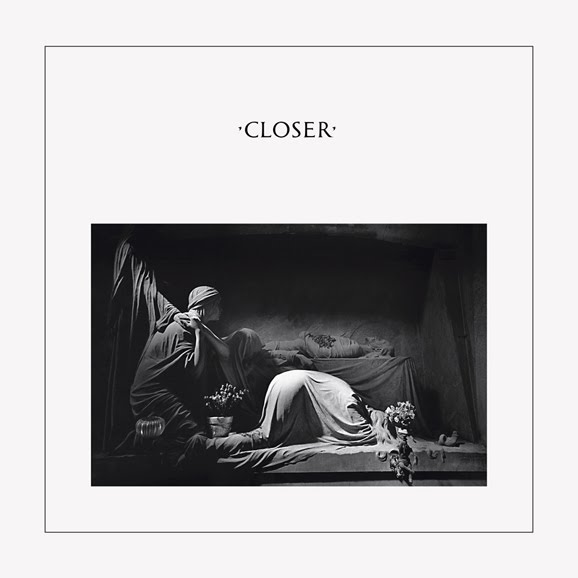
J0y Divisi0n- CLos3r (1980) Collector's Edition (Bonus Disc) / Love Will Tear Us Apart EP (1995) MP3 & FLAC


"This is the crisis I knew had to come, destroying the balance I'd kept."

Given their status as the artistic summit of the Post-Punk era, it's hard to believe Joy Division only released two official studio albums during their existence. Whereas their first album, Unknown Pleasures, was nothing less than a paradigm shift in the sense that it left behind Punk's aggressive agit ethos for a darker, moodier, and more complex sound and, in the process, played a central role in the rise of Post-Punk, the band's follow up, Closer, has had a more complicated history, for while it has been rightly hailed as Joy Division's artistic masterpiece, the album also holds the distinction of having been released soon after Ian Curtis' suicide on the eve of the band's first U.S. tour. As a result, many view the album's lyrical content as something of a suicide note, a position that makes it nearly impossible to judge Closer solely on its own terms. Without a doubt, Closer is an emotionally dark and ravaged album, and Curtis' lyrics are often suggestive of the struggles he was going through, including a crumbling marriage and worsening epileptic seizures; however, Closer is also an artistic triumph for the band as a whole, managing to build on all the innovations of the first album while pushing the gloom and claustrophobia in even more starkly beautiful directions. The non-album single preceding the release of Closer, "Love Will Tear Us Apart," a song that has since been absorbed (though thankfully not yet co-opted) by the cultural mainstream, is a precursor to the pop-oriented direction the band would eventually take after reforming as New Order. Despite its pop-song trappings, lyrically, it is undoubtedly one of the bleakest love songs ever penned, and with Peter Hook's weeping bass-lines and Curtis' vocals, which sound as though they are emanating from the depths of a well, it is more than worthy of its iconic status. The album itself throws off all pop pretense on songs such as "Twenty-Four Hours," a devastatingly brilliant meditation on a soul descending into inconsolable darkness and " Heart and Soul," a slow-burner with a deceptively simple arrangement that finds Curtis stepping back from personal agony to take a wider (though no less dark) look at the human condition. Closer was destined to be Joy Division's swan-song, but listening to it some 30 years later, it is hard to imagine how they could have ever recorded a more perfect distillation of their unparalleled sound.